
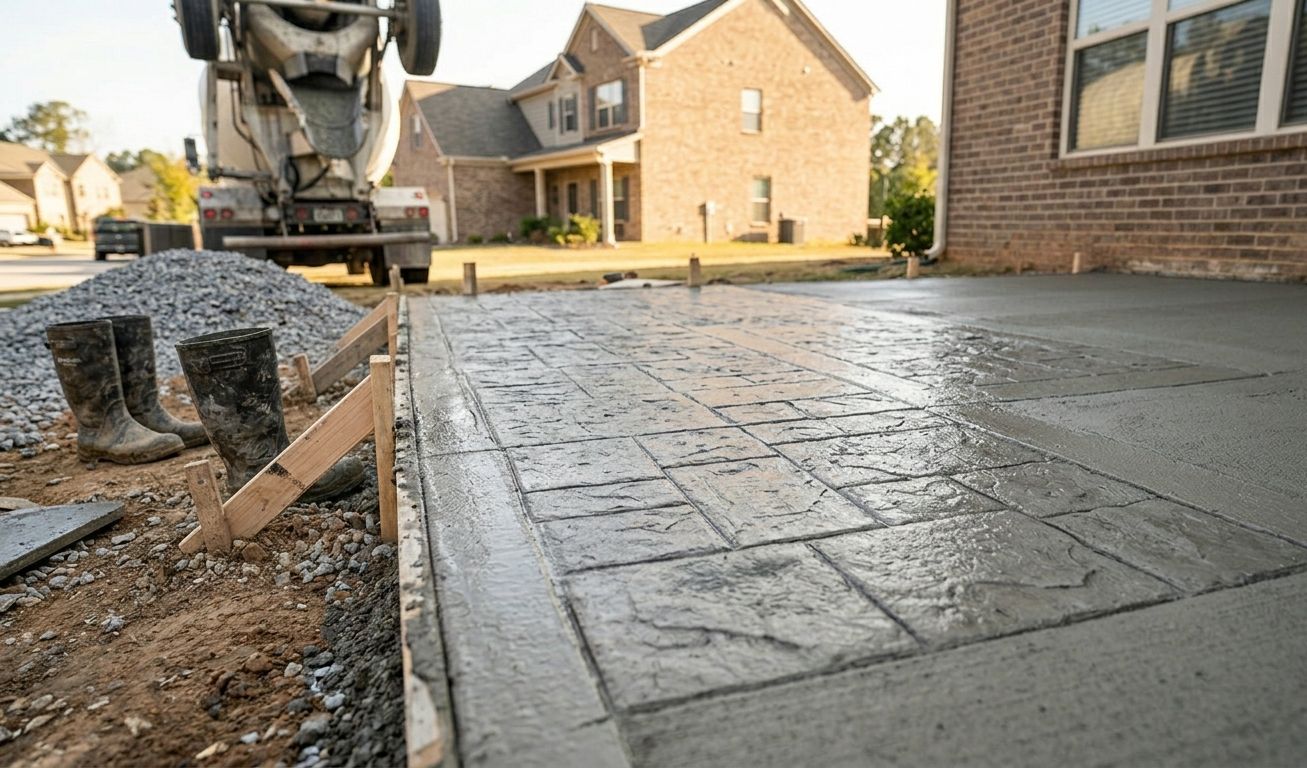

This in-progress stamped concrete driveway installation showcases the professional techniques and attention to detail that create long-lasting decorative concrete surfaces. Rock and Concrete Company is transforming this McDonough neighborhood property with a new driveway featuring an ashlar slate pattern in sophisticated gray tones. The image captures the critical installation phase with fresh concrete being poured, proper edge forms in place, and aggregate base materials ready for additional sections.
The stamped pattern replicates natural cut stone pavers arranged in random rectangular configurations that provide timeless appeal. Gray coloring coordinates with various home exterior styles while offering practical benefits like heat reflection and dirt concealment. This residential project demonstrates the complex coordination required for quality stamped concrete work including proper site preparation, precise forming, coordinated concrete delivery, and skilled finishing techniques.
Site Preparation and Base Construction
Quality stamped concrete begins with thorough site preparation including excavation to appropriate depth and removal of organic materials. The visible aggregate base material provides stable foundation that prevents settling and supports vehicle weight without cracking the concrete surface. Proper compaction of base layers creates uniform density that eliminates soft spots and ensures consistent support.
Grading during preparation establishes proper drainage slopes that direct water away from foundations and prevent pooling on the finished surface. The base depth must accommodate both the aggregate layer and concrete thickness required for driveway applications. Professional contractors calculate these specifications based on soil conditions, expected traffic loads, and local climate factors including freeze-thaw cycles.
Edge Forming and Control Joints
The wooden forms visible along the driveway edges create precise boundaries that define the concrete placement area and establish finished surface elevation. Forms must be securely staked and braced to withstand the pressure of wet concrete during pouring and finishing. Straight, level forms ensure the driveway has consistent thickness and professional appearance with clean edges.
Proper forming includes creating expansion joints that allow concrete to move slightly with temperature changes without cracking. Control joints are strategically placed to guide any cracking to designated locations where it remains less visible. The forming layout considers the home’s architecture, property lines, and transition points to other hardscape elements for cohesive overall design.
Form Construction Techniques
Professional form construction uses dimensional lumber secured with stakes driven deep enough to resist movement. Forms must be level across their width and establish proper slope for drainage along their length. Interior corners require careful bracing to prevent bulging when concrete weight applies pressure. Proper form release application prevents concrete adhesion for easy removal.
The visible forms in this installation demonstrate proper technique with straight lumber secured at regular intervals. Form height matches the specified concrete thickness for the driveway application. Once concrete cures sufficiently, forms are removed and edges receive finish treatment. Quality forming work creates clean lines that define the driveway boundaries and contribute to professional appearance.
Concrete Mix and Delivery Coordination
Stamped concrete requires specific mix designs that provide workability for pattern impression while achieving necessary strength for vehicle traffic. The mix includes cement, aggregates, water, and admixtures that control setting time and enhance durability. Color can be integrally mixed throughout the concrete or applied as surface hardener during finishing.
Concrete truck delivery timing is critical as the material must be placed, finished, and stamped within a limited working window. Large driveway projects may require multiple trucks with coordinated arrival times to maintain consistent color and avoid cold joints between loads. Professional contractors calculate concrete volume precisely to order appropriate quantities that complete the project efficiently.
Ashlar Slate Pattern Design
The ashlar slate pattern features random rectangular shapes in varied sizes that replicate natural cut stone pavers. This sophisticated design works beautifully with traditional and contemporary architecture, providing versatile appeal that enhances property values. The rectangular orientation creates visual movement across the surface while maintaining ordered, elegant appearance.
Pattern stamping requires specialized mats with the ashlar design that are systematically pressed into concrete at optimal firmness. Stamp placement must align properly to avoid obvious repetition and maintain pattern continuity across the entire surface. Multiple stamp mats are rotated through the installation to vary the pattern and create authentic stone-like appearance.
Gray Color Selection Benefits
Gray stamped concrete offers neutral sophistication that coordinates with diverse home exteriors and landscape designs. Medium to darker gray tones provide practical benefits including heat reflection properties better than black but superior dirt concealment compared to light colors. Natural variation in gray shades creates depth and authenticity that mimics real stone.
Color application methods include integral color mixed throughout the concrete, color hardener broadcast on the surface, or acid staining applied after curing. Each technique creates different appearance characteristics with varying maintenance requirements. Gray tones remain popular for driveways as they maintain attractive appearance between cleanings and coordinate with most architectural styles.
Installation Timing and Weather Considerations
Concrete placement requires appropriate weather conditions with temperatures between 50 and 85 degrees Fahrenheit for optimal curing. Extreme heat accelerates setting time and makes stamping difficult, while cold temperatures slow curing and risk freeze damage. Professional contractors monitor weather forecasts carefully and schedule pours during favorable conditions.
The installation process must proceed efficiently once concrete arrives, with finishing and stamping completed before the material sets too firm. Adequate crew size ensures all tasks can be accomplished within the working window. The visible concrete truck in this image indicates the active pour phase when timing and coordination are most critical.
Curing and Protection Procedures
Proper curing allows concrete to achieve full strength and durability through controlled moisture retention. Newly placed concrete requires protection from rapid moisture loss, extreme temperatures, and physical damage during the curing period. Curing compounds, plastic sheeting, or water spraying maintain appropriate moisture levels as the concrete hardens.
Traffic must be restricted from new concrete for appropriate time periods, typically several days for foot traffic and longer for vehicles. Premature loading can damage the surface and compromise long-term durability. Professional contractors provide clear guidance about when the driveway can be safely used and when vehicles can be driven on the new surface.
Neighborhood Coordination and Property Enhancement
Residential concrete work requires consideration of neighborhood aesthetics and property relationships. Quality driveways enhance not only the individual home but contribute to overall neighborhood appeal and property values. The visible neighboring homes in this image demonstrate the suburban setting where coordinated exterior improvements benefit the entire community.
Professional contractors minimize disruption to neighbors through efficient work practices, appropriate equipment use, and thorough cleanup. Concrete trucks and equipment require street access and temporary parking that may affect nearby residents. Clear communication and respectful jobsite management maintain positive relationships throughout the installation process.
Professional Stamped Concrete Services in McDonough
Rock and Concrete Company specializes in decorative concrete installations including stamped driveways, patios, and walkways throughout McDonough and surrounding Georgia communities. Our experienced team manages all project aspects from design consultation and site preparation through final sealing and cleanup. We use premium materials and proven techniques that ensure beautiful, long-lasting results.
Serving the McDonough area, we deliver quality craftsmanship with attention to details that distinguish professional concrete work. Contact us at (470) 696-7496 to schedule a consultation for your stamped concrete project. Whether planning a new driveway or upgrading existing concrete, our team creates stunning outdoor surfaces that enhance your property’s value and curb appeal.