
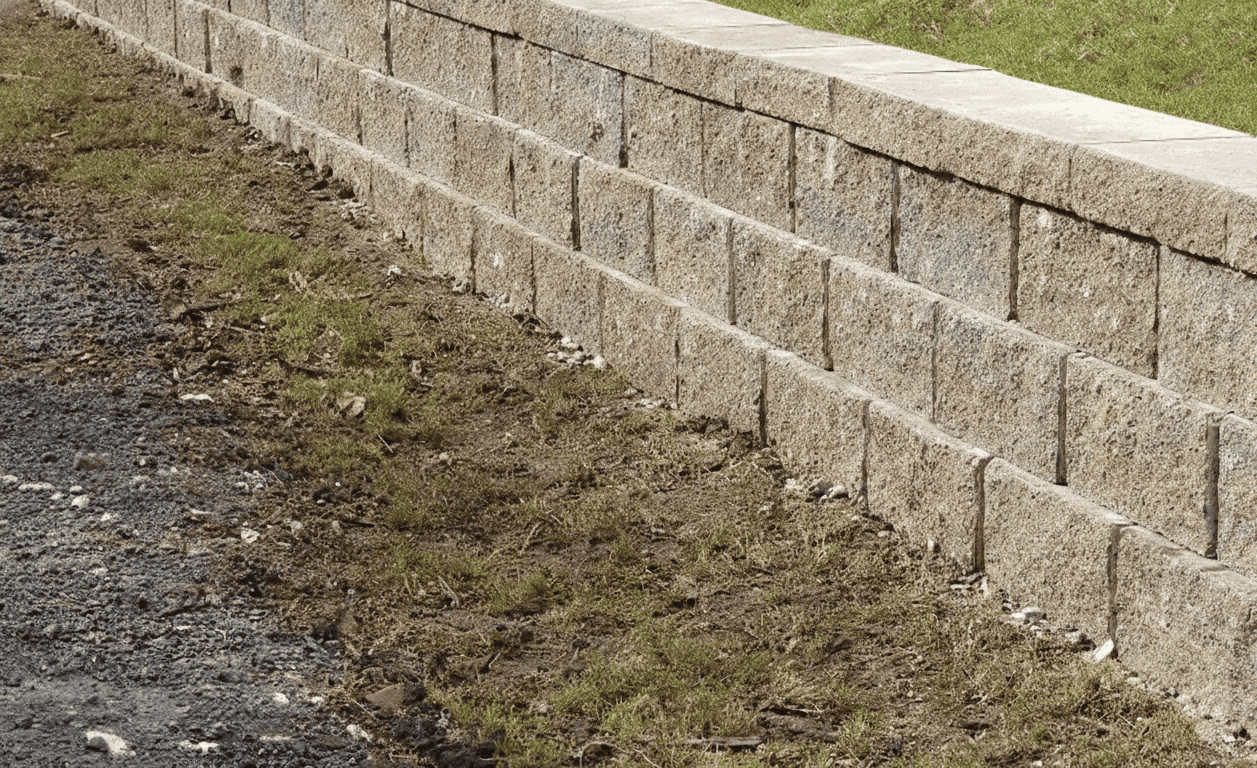

A properly built retaining wall does more than separate elevations—it protects your property, prevents soil erosion, manages drainage, and elevates curb appeal. The retaining wall shown in the image illustrates how a carefully engineered block system can reinforce sloped terrain while adding clean, structured definition to the landscape. For homeowners in McDonough, GA, retaining walls are not just functional—they’re a long-term investment in property resilience and visual appeal.
Retaining walls in Georgia often face pressure from heavy clay soils, seasonal rain, and natural ground shifting. When designed and installed correctly, they prevent erosion, stabilize slopes, and support the surrounding environment. The wall in this project is built from interlocking concrete blocks, known for their strength, durability, and architectural finish. Its uniform construction and tiered height demonstrate attention to both engineering and craftsmanship, ensuring the structure remains solid for years to come.
Natural terrain in McDonough frequently requires reinforcement due to elevation changes and runoff patterns. Without proper structural support, soil can wash away, compromising foundations, driveways, pavements, and outdoor living spaces. This retaining wall provides reliable protection against those risks, forming a stable boundary between the upper and lower grades of the property.
Why Retaining Walls Are Essential for Georgia Properties
Georgia’s dense soils and unpredictable rainfall make retaining walls a necessity in many residential and commercial landscapes. Without a proper support system, slopes can weaken, leading to sinkage, soil displacement, and water accumulation. Installing a retaining wall like the one pictured helps homeowners safeguard their property while improving functionality.
Some of the most important benefits include:
- Erosion control that prevents soil from shifting during heavy rain
- Structural support for sloped or elevated areas
- Improved drainage when installed with proper gravel backfill and piping
- Enhanced curb appeal, adding visual texture and definition
- Extended usable space, making sloped areas functional and accessible
The pictured retaining wall demonstrates these benefits clearly. Its multi-tiered structure distributes pressure evenly, improving long-term performance and reducing maintenance needs.
The Importance of Proper Base Preparation
A retaining wall is only as strong as the base beneath it. In this project, the installer prepared a compacted gravel foundation, allowing the wall to sit level and distribute weight properly. This foundation prevents shifting, sinking, and cracking—common issues when retaining walls are not professionally installed.
Key steps in proper base preparation include:
- Excavating to the correct depth
- Creating a thick, compacted gravel layer
- Ensuring the first row of block remains perfectly level
- Adding geogrid reinforcement when needed for taller walls
The stability of the wall shown is a result of careful ground preparation. Each block sits securely, creating a smooth appearance and durable result.
Block Selection and Construction Details
The retaining wall blocks chosen for this project offer both structural and aesthetic advantages. Their textured finish complements natural landscapes while delivering the strength needed to withstand soil pressure. Because block systems interlock, they provide stability without requiring mortar, allowing natural movement without compromising integrity.
Construction details visible in the image include:
- Clean, straight wall alignment for visual consistency
- Staggered block placement to improve stability
- Tightly fitted joints that prevent movement
- Top cap installation for a polished, finished look
These elements come together to form a retaining wall that resists shifting, cracking, and bulging—common problems when walls are built without proper engineering.
How This Retaining Wall Improves Drainage
One of the most important functions of a retaining wall is managing water flow. When water collects behind a wall, pressure increases dramatically, which can lead to failure. The pictured wall likely includes essential drainage features that keep the structure secure.
Drainage solutions often used in retaining wall construction include:
- Perforated drainage pipe
- Washed gravel backfill
- Filter fabric to prevent soil migration
- Proper wall setback to improve structural strength
Together, these components help redirect water, reduce hydrostatic pressure, and keep the soil behind the wall dry and compact.
Curb Appeal and Property Value Benefits
Beyond structural stability, the retaining wall adds a polished, well-maintained look to the landscape. The clean lines and uniform block pattern create visual order, making the outdoor space appear more intentional and cared for. Whether surrounding a garden, driveway, or sloped yard, a retaining wall like this significantly improves the overall appearance of the property.
Homeowners also benefit from:
- Increased resale value
- Better definition of outdoor zones
- Improved landscaping opportunities
- Reduced long-term maintenance costs
Retaining walls are a long-term improvement that blend form and function, making them a smart investment for property owners in McDonough, GA.
For those considering similar upgrades, Rock and Concrete Company can provide professional guidance and installation. Homeowners can reach the team at 470-696-7496 for more information.
A Stronger, More Functional Landscape
This retaining wall demonstrates how expert installation transforms uneven or unstable terrain into a structured, usable, and visually appealing landscape. When built correctly, retaining walls add safety, support, and design value while protecting the property from erosion and soil displacement. As seen in this project, the right materials and craftsmanship make all the difference.