
Managing elevation changes in a yard requires more than surface-level fixes. This project addressed a sloped backyard area where soil movement and uneven grading limited usable space and created long-term maintenance concerns. The goal was to introduce a durable structural solution that would stabilize the grade while blending naturally into the surrounding landscape.
Rather than relying on temporary erosion control methods, the project focused on building a permanent retaining wall system. The design emphasized clean lines, consistent elevation, and proper support to ensure the wall would perform reliably over time while enhancing the overall appearance of the yard.
Addressing Grade Changes with a Functional Retaining Wall Design
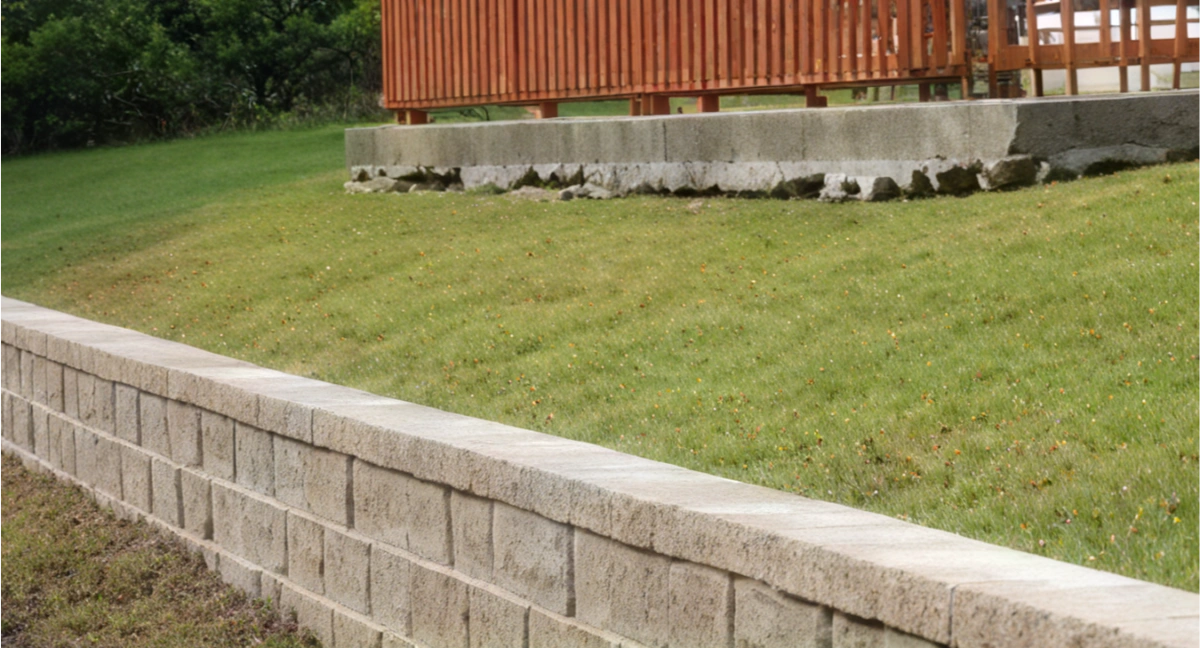
Sloped terrain can lead to drainage issues, soil displacement, and restricted outdoor use if left unaddressed. This retaining wall was designed to hold back soil effectively while creating a clear transition between elevation levels. By defining the edge of the slope, the wall establishes stability and prevents gradual erosion.
The straight, uniform layout helps the wall integrate seamlessly with the existing lawn and surrounding features. This approach keeps the yard visually organized while improving long-term performance in areas exposed to runoff and seasonal weather changes.
Concrete Block Construction Built for Strength and Longevity
Concrete retaining blocks were selected for their strength, consistency, and ability to withstand pressure from retained soil. Each course was carefully leveled to maintain alignment and ensure even load distribution across the entire structure.
Proper base preparation played a critical role in the installation. A compacted foundation and precise placement help prevent shifting or settling, allowing the wall to remain stable and visually clean over time.
Creating a Clean Transition Between Lawn and Elevated Areas
Beyond structural support, the retaining wall also serves as a visual boundary within the yard. The finished height creates a clear separation between the upper lawn area and the lower grade, making the space feel intentional and well-defined.
This transition improves usability by allowing each section of the yard to serve its purpose without encroachment. The clean edge simplifies mowing, landscaping, and ongoing maintenance.
Drainage Considerations That Protect the Wall and Yard
Water management is essential for retaining wall performance. Behind the wall, proper drainage considerations help relieve pressure and reduce moisture buildup that could affect structural integrity over time.
By controlling water flow and supporting soil stability, the wall helps preserve surrounding landscaping and prevents issues that often arise in untreated sloped areas.
Enhancing Curb Appeal with a Structured Landscape Feature
Retaining walls contribute more than function—they add visual order to outdoor spaces. The consistent block pattern and straight alignment give the yard a polished appearance that complements the surrounding lawn and hardscape elements.
This structure creates a clean backdrop for future landscaping additions while maintaining a neutral, timeless look that fits a wide range of property styles.
A Practical Investment for Long-Term Yard Stability
Unlike temporary solutions, a properly installed concrete retaining wall offers long-term performance and reduced maintenance. The materials resist weathering, soil pressure, and daily exposure while maintaining their appearance.
This project provides lasting stability and a more usable outdoor area. The work was completed by Rock and Concrete Company, serving property owners in McDonough, GA. For questions about similar retaining wall projects, the company can be reached at (470) 696-7496.