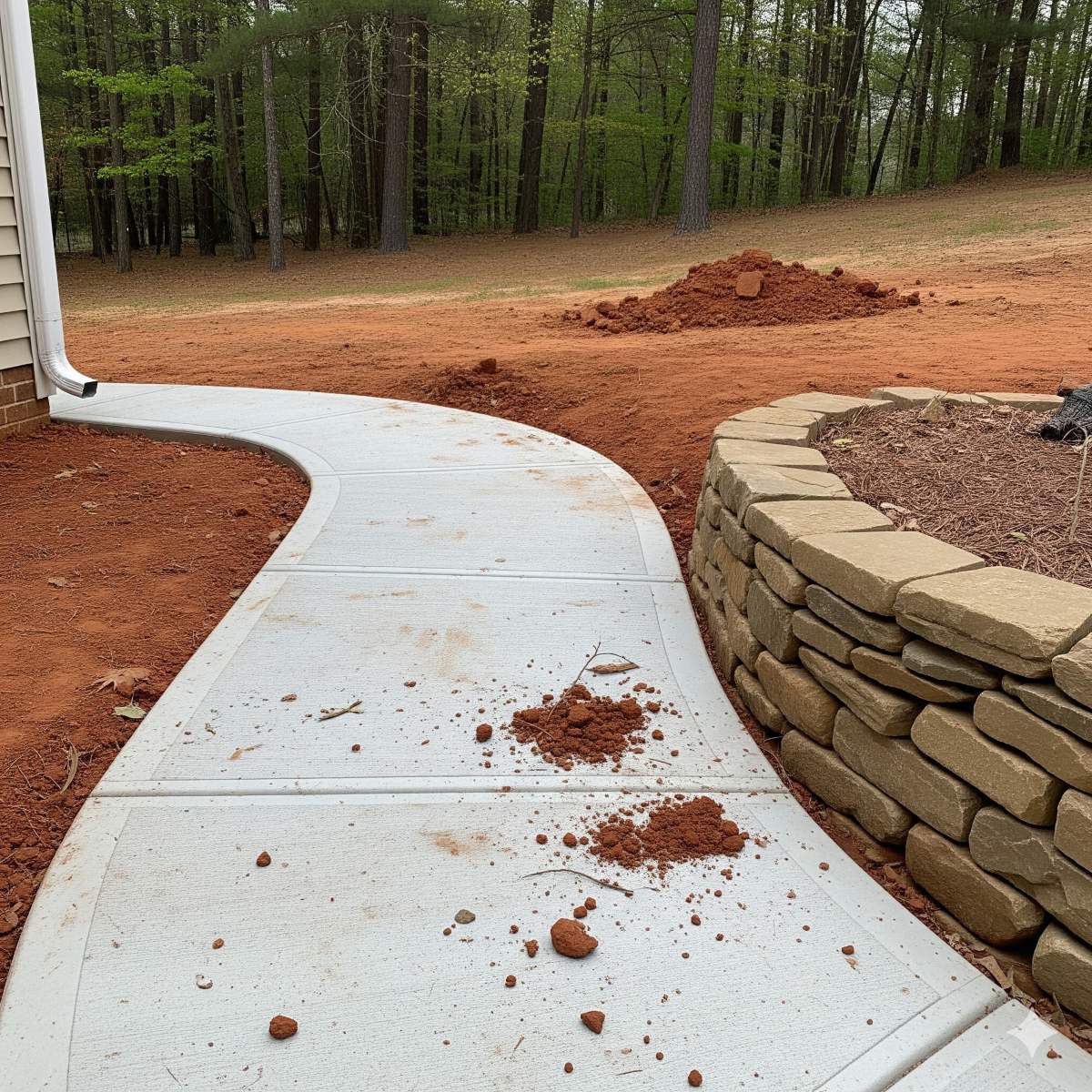

A bare, red-clay yard with no defined structure presents both a challenge and an opportunity for skilled hardscape contractors. This McDonough property received a sweeping curved concrete walkway paired with a substantial stacked natural stone retaining wall that creates definition, function, and visual character where there was none before. The combination of poured concrete and dry-stacked stone addresses both the practical grading demands of Georgia’s sloped terrain and the aesthetic goals of a polished outdoor space.
The red Georgia clay visible throughout the project photos tells the story of a yard being reshaped from the ground up, with excavation, grading, and hardscape construction happening in coordinated sequence. Understanding how concrete flatwork and stone retaining walls work together to solve drainage and landscaping challenges helps homeowners appreciate the scope of what this type of project delivers.
The Starting Conditions
The property presented classic challenges found throughout the McDonough area — sloped red clay terrain with no established hardscape, poor natural drainage pathways, and no defined connection between the home’s entry and the surrounding yard. Without intervention, sloped clay yards shed water aggressively toward foundations and create muddy, unusable outdoor spaces. Addressing these issues required both earthwork and permanent hardscape installation working together.
The excavation visible in the background of the project photos shows the extent of grading work performed before a single concrete form was set. Moving and shaping the native red clay established the proper elevation changes that allow both the walkway and the retaining wall to function as intended long after the project is complete.
H2: Designing the Curved Walkway
A straight concrete walkway would have been faster and cheaper, but the curved design chosen for this project serves both functional and aesthetic purposes. The gentle arc follows the natural contour of the yard, creating a graceful transition between the home and the landscape rather than cutting across it at an arbitrary angle. This approach integrates the hardscape with the surroundings rather than imposing upon them.
Forming curved concrete requires bending flexible form boards precisely to achieve smooth, consistent radius lines without flat spots or irregular curves. The clean, continuous arc visible in the finished walkway reflects careful form work and experienced finishing technique that ensures the curve holds its shape and drains properly across its full length.
Concrete Mix and Surface Finish
The walkway surface features a broom finish texture running perpendicular to the direction of travel, providing traction in Georgia’s rainy seasons without sacrificing the clean, finished appearance of professional concrete work. The light gray color of the poured concrete contrasts attractively with the surrounding red clay soil, making the pathway visually clear and easy to follow. Control joints cut at regular intervals manage the expansion and cracking that Georgia’s temperature swings inevitably produce.
Proper concrete thickness and subbase preparation underneath the walkway are as important as the surface finish, ensuring the slab carries foot traffic and resists movement as the soil beneath it settles and shifts through seasonal moisture changes. These foundational details are invisible in the finished photos but determine whether concrete flatwork lasts five years or fifty.
The Stacked Stone Retaining Wall
The natural stone retaining wall running alongside the walkway is built from large, flat-faced tan and buff-toned stones dry-stacked in a technique that has anchored hillsides for centuries. Each course of stone is set with deliberate attention to overlap, creating a running bond pattern that ties the wall together structurally while producing the irregular, organic texture that makes natural stone walls so visually appealing. The wall rises several courses high, creating a substantial raised bed area behind it.
Dry-stacked stone walls require no mortar — their stability comes entirely from proper stone selection, careful placement, and the natural friction between courses. This construction method allows minor movement without cracking, making it particularly well-suited to Georgia’s expansive clay soils that shift significantly with seasonal wet and dry cycles.
Creating the Raised Garden Bed
Behind the retaining wall, the elevated soil area creates a defined raised garden bed that will eventually support plantings, shrubs, or ornamental landscaping as the homeowner develops the yard. The wall contains the red clay fill while providing clean visual separation between the hardscape walkway and the planting zone. This structure gives the homeowner flexibility in how the space is eventually planted without requiring additional excavation or construction.
Raised garden beds defined by stone retaining walls are among the most functional and enduring landscape features a property can have. They improve drainage for plantings, eliminate the gradual soil erosion that flat-ground beds experience, and create permanent structure that frames the yard for decades without replacement or repair.
Grading and Drainage Considerations
The significant earthwork visible in the project photos reflects the grading work required to establish proper drainage patterns across the property before hardscape installation began. Georgia red clay is notoriously slow to absorb water, making surface drainage critical for preventing pooling near foundations and on walkway surfaces. The graded terrain directs water away from the home and toward appropriate discharge areas at the property perimeter.
The relationship between the retaining wall elevation, the walkway slope, and the surrounding grade was carefully engineered to work as a complete system rather than as isolated elements. Water that might otherwise sheet across an uncontrolled slope now follows defined pathways around the walkway and through the landscaped areas the retaining wall creates.
Integrating Hardscape with the Natural Landscape
The mature pine and hardwood tree line visible at the property’s rear boundary provided the design context for keeping the hardscape materials natural and understated. The tan stone wall tones and gray concrete complement the wooded backdrop without competing with it, allowing the landscaping to feel like a natural extension of the surrounding environment. This kind of material sensitivity produces finished outdoor spaces that feel intentional rather than imposed.
As the disturbed red clay areas receive topsoil, seed, or mulch in the weeks following construction, the contrast between raw earth and finished hardscape will soften into a cohesive landscape that makes the curved walkway and stone wall feel fully integrated with their surroundings.
Custom Hardscape by Rock and Concrete Company
Curved concrete flatwork, natural stone retaining walls, and precision grading require a contractor who understands how all three disciplines work together to deliver lasting results. Rock and Concrete Company brings comprehensive hardscape expertise to projects throughout McDonough, GA, designing and building outdoor spaces that solve real drainage and usability challenges while delivering the craftsmanship property owners expect. From custom curved walkways to dry-stacked stone walls and complete yard grading, every project receives the attention to detail that protects your investment for years to come. Contact Rock and Concrete Company at (470) 696-7496 to start planning your hardscape project.